Home › Services › Expansion & Control Joint Sealing
If there's a gap or crumbling strip between your driveway and garage floor, or between sections of your pool deck, that's a failed expansion or control joint — one of the cheapest concrete problems to fix, and one of the most expensive to ignore.
The joint between your driveway and garage floor, and between individual driveway sections — the highest-traffic joint on most properties.
The joint between pool coping and the deck, color-matched to your existing concrete — failure here is one of the most consequential joint problems since it sits right at the water line.
The intentional cut lines in a poured slab that control where cracking happens — kept sealed and watertight.
An open expansion joint isn't just cosmetic. It's a direct path for rainwater to get under your slab, which accelerates soil erosion beneath the concrete and is one of the leading causes of a driveway or pool deck settling unevenly over time. Keeping joints sealed is inexpensive, preventive maintenance — the kind of thing that's genuinely cheap insurance against a far more expensive repair down the line.
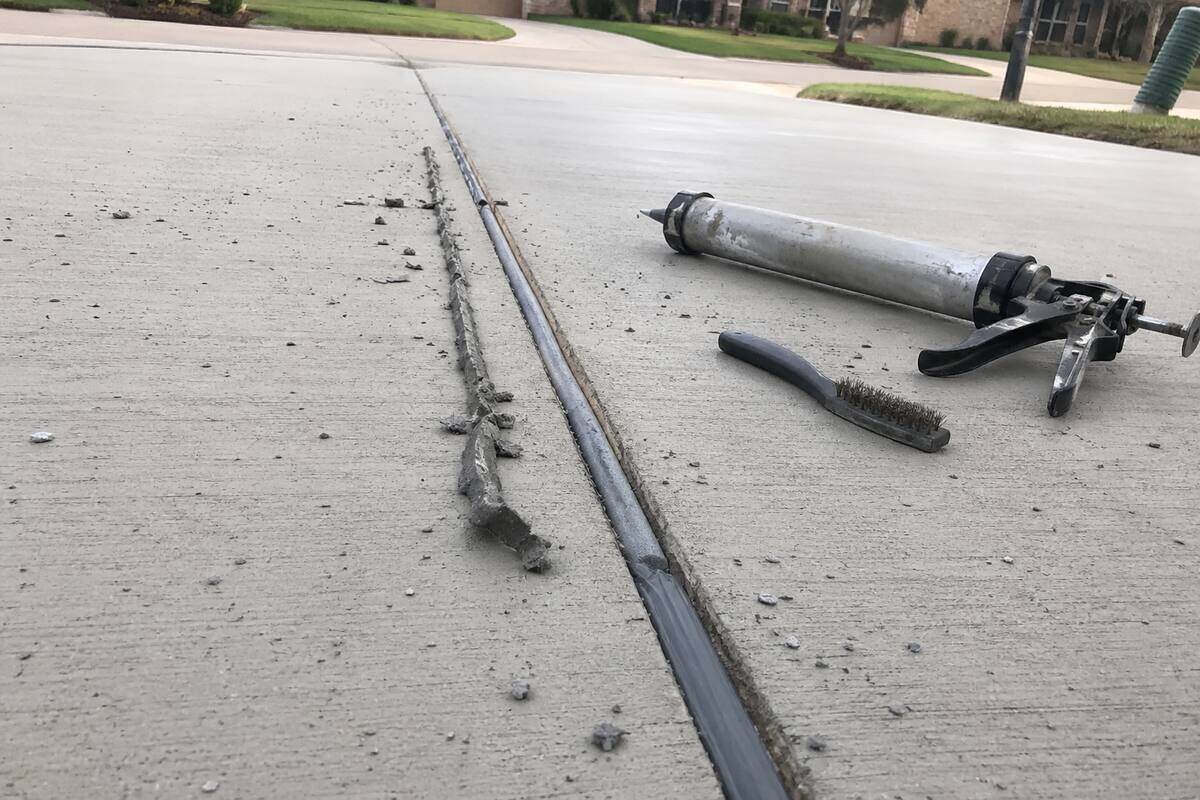
Any remaining old sealant, wood filler, or debris is cleaned out of the joint down to a clean, dry surface.
A polyurethane or silicone self-leveling sealant is poured in, color-matched where it's visible, and cures into a flexible, watertight seal.
It's the flexible strip between two concrete slabs (like your driveway and garage floor) that lets each slab expand and contract independently without cracking. It's filled with a flexible sealant, not solid concrete, on purpose.
Older joints were often filled with wood or an early-generation sealant that dries out, shrinks, and eventually crumbles or washes out under Houston's sun and rain cycles, leaving an open gap.
Most residential jobs are completed in a single visit, with self-leveling sealant that cures quickly and is walkable the same day in most cases.
Call for a fast evaluation or send your details online.
Call (281) 972-2981 Houston