Home › Services › Concrete Void Filling
The empty space that forms under a slab when soil washes out is what leads to cracks and sinking. Filling those voids with expanding foam restores support and stops settlement before it turns into a dropped, broken slab. Serving Houston and the surrounding metro.
Most concrete settlement starts as an invisible void. Soil erodes or compacts away from the underside of a slab — from washout, poor drainage, or the natural shrink of clay in a drought — leaving an empty pocket the concrete is now bridging over with nothing beneath it. For a while the slab holds, but every load flexes it into that empty space until it cracks, and eventually a section drops into the void. Void filling gets ahead of that. Expanding polyurethane foam injected through small ports fills the empty space and re-establishes continuous support under the concrete, so the slab is bearing on solid fill again instead of spanning a hole. It's both a repair and a preventive measure — filling a void early can stop a slab from ever dropping in the first place.
Washout from downspouts and poor grading undermines the slab edges.
Constant moisture erodes soil beneath deck slabs and coping.
Gaps that open beside a foundation from clay shrinkage and erosion.
Voids beneath interior slabs that start to sound hollow or crack.
You can often catch a void before the slab fails if you know what to listen and look for: concrete that sounds hollow when tapped, a slab section that flexes or rocks slightly underfoot or under a vehicle, fresh cracks appearing, or a corner just beginning to dip. Water that pools then vanishes quickly near a slab can also point to washout below. This matters more in Houston than in most places. Our expansive clay soils and the region's cycle of drought and heavy, flooding rain create and enlarge under-slab voids aggressively — the clay pulls back in dry spells and washes away in wet ones. And a void never stays the same size; left open, it collects more eroding soil and grows. Filling it promptly keeps a small, cheap support issue from becoming major settlement, or from progressing into foundation trouble. Void filling and slab leveling often happen together — the space gets filled and any slab that has already dropped is raised in the same process.
The downspout case is worth separating out, because filling a void without fixing what emptied it buys about one wet season. A downspout discharging at the slab edge concentrates a roof's entire catchment into a few square feet of soil, and no injected material outlasts that. Where drainage rather than clay is the cause, moving the water away from the slab before it ever reaches it is the repair that has to come first.
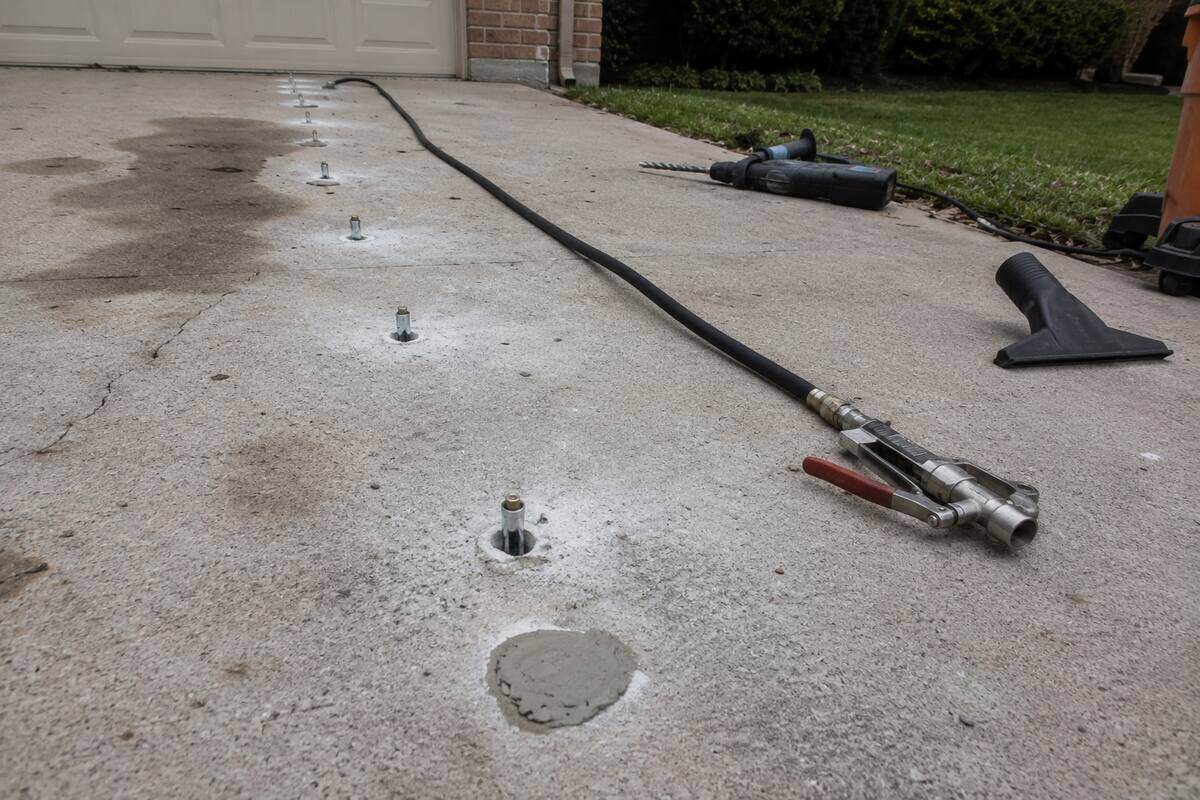
It's injecting material to fill the empty space that forms under a slab when soil washes out or settles. Left empty, that void lets the slab flex, crack, and eventually drop. Filling it — usually with expanding polyurethane foam — restores full support and stops the settlement cycle before the slab fails.
Common signs are a slab that sounds hollow when tapped, a section that flexes or rocks under weight, new cracks, or a slab starting to drop at one edge. Water pooling or disappearing quickly near a slab can also indicate washout. We can confirm a suspected void before recommending work.
They're related. Void filling restores support by filling the empty space; leveling additionally lifts a slab that has already dropped back to level. Often both happen in one job — the void gets filled and the slab raised in the same injection process.
Houston's expansive clay and heavy rain create washout voids under slabs and around foundations aggressively. An unfilled void only grows as more soil erodes into it, so addressing it early keeps a minor support issue from becoming major settlement or foundation trouble.
Stop settlement before it starts, across Houston.
Call (281) 972-2981 Houston